
Worksheets and No Prep Teaching Resources
Reading Comprehension Worksheets
Sports
Sports
|
Worksheets and No Prep Teaching Resources Reading Comprehension Worksheets Sports |
Sports |
| edHelper's suggested reading level: | grades 4 to 6 | |
| Flesch-Kincaid grade level: | 5.1 |
|
Tennis Anyone?
By Jane Runyon |
|
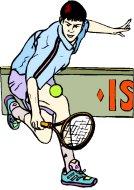 1 Tennis and badminton probably started in much the same way. Players used a paddle to hit an object back and forth to each other. The object was to keep the object in the air and not drop it. During the Middle Ages, the French played a game called court tennis or royal tennis. The game made its way to England where members of King Henry VIII's court enjoyed the pastime. They used a ball made of sheepskin that had been filled with sawdust, sand, or wool.
 |
Create Weekly Reading Books
Prepare for an entire week at once! |
| Leave your feedback on Tennis Anyone? (use this link if you found an error in the story) |
|
Sports
|