edHelper.com
Matter


Unusual Molecules: Buckyballs


Unusual Molecules: Buckyballs
Reading Level
     edHelper's suggested reading level:   grades 8 to 12
     Flesch-Kincaid grade level:   9.44

Vocabulary
     challenging words:    stability, asteroid, laser, correspond, caption, discovery, hypothesis, interesting, slippery, researchers, rocks, series, link, architect, energy, chemistry
     content words:    Robert Curl, Harold Kroto, Richard Smalley, Buckminster Fuller, Nobel Prize


Print Unusual Molecules: Buckyballs
edHelper.com subscriber options:
     Print Unusual Molecules: Buckyballs  (font options, pick words for additional puzzles, and more)

     Quickly print reading comprehension

     Print a proofreading activity


Feedback on Unusual Molecules: Buckyballs
     Leave your feedback on Unusual Molecules: Buckyballs  (use this link if you found an error in the story)


Unusual Molecules: Buckyballs
By Cindy Grigg
  

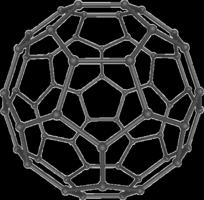
1     Caption: A 3D model of a en:C60 molecule, also called a "Buckyball".
 
2     In 1985, scientists found a new kind of molecule. In a lab experiment, light from a laser was projected onto a piece of graphite (just like the "lead" in your pencil). The laser's energy caused the carbon atoms of the graphite to burn. In the soot that was left, scientists Robert Curl, Harold Kroto, and Richard Smalley found a completely new kind of molecule- the "buckyball"!
 
3     Buckyballs were named for the architect Buckminster Fuller. The carbon molecules look like the geodesic domes that were often used in the architect's work. Fuller used a series of interlocking hexagons and pentagons to build his geodesic domes. The design distributes weight evenly and gives great stability. It is the only architectural design that gets stronger as it increases in size.

Paragraphs 4 to 8:
For the complete story with questions: click here for printable


Copyright © 2008 edHelper