edHelper.com


Writing a Complete Sentence


Writing a Complete Sentence
Reading Level
     edHelper's suggested reading level:   high interest, readability grades 4 to 6
     Flesch-Kincaid grade level:   3.05

Vocabulary
     challenging words:    predicate, writing, command, verb, actually, assignment, imperative, reader, subject, such, sentence, simple, poor, form, test, state


Print Writing a Complete Sentence
edHelper.com subscriber options:
     Print Writing a Complete Sentence  (font options, pick words for additional puzzles, and more)

     Quickly print reading comprehension

     Print a proofreading activity


Feedback on Writing a Complete Sentence
     Leave your feedback on Writing a Complete Sentence  (use this link if you found an error in the story)


Writing a Complete Sentence
By Patti Hutchison
  

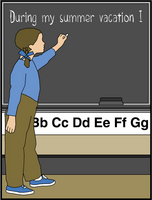
1     Your teacher hands back your latest writing assignment. She takes care to fold yours so that the other students can't see your grade. Uh-oh! That can't be good. You bend over your paper and carefully unfold it. Your grade is a "D." How can that be? You thought you did well on this one.
 
2     You look over your paper carefully. Written in the margins, many times, are the words "not a complete sentence." No wonder you got such a poor grade. But, just what is a complete sentence?
 
3     A complete sentence has a subject and a verb. No kidding, a sentence can have just two words and be complete. For example: Dogs bark. This is a complete sentence. It has a subject, dogs. And it has a verb, bark. Actually, some sentences only have one word. "Look!" is a sentence. The subject, you, is understood. This is a special kind of sentence called an imperative sentence. It gives a command. All this sounds simple, right? But your teacher is no doubt expecting something more from you. As you write more complicated sentences, how can you tell if they are complete?

Paragraphs 4 to 9:
For the complete story with questions: click here for printable


Copyright © 2008 edHelper