edHelper.com
Life Science
Animal and Biomes Basics Theme Unit
The Animal Kingdom


The Animal Kingdom
Reading Level
     edHelper's suggested reading level:   grades 6 to 8
     Flesch-Kincaid grade level:   6.41

Vocabulary
     challenging words:    bighorn, offspring, environment, itself, reproduce, during, escape, male, birth, adult, become, within, eventually, life, level, produce


Print The Animal Kingdom
     Print The Animal Kingdom  (font options, pick words for additional puzzles, and more)


Quickly Print - PDF format
     Quickly Print: PDF (2 columns per page)

     Quickly Print: PDF (full page)


Quickly Print - HTML format
     Quickly Print: HTML


Proofreading Activity
     Print a proofreading activity


Feedback on The Animal Kingdom
     Leave your feedback on The Animal Kingdom  (use this link if you found an error in the story)


The Animal Kingdom
By Cindy Grigg
  

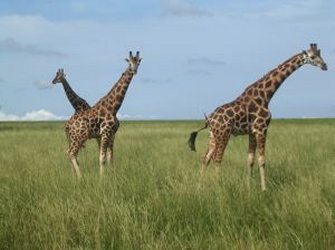
1     There are many different kinds of animals. Whales, cows, and people are all animals. They are all mammals, too. But they don't look very much alike or live in places that are very much alike, either. But they do have some things in common. Whales, cows, and people all give birth to live babies and feed them with milk from the mother's body. This is what makes them mammals. So what makes an animal an animal? What do all animals have in common?
 
2     On a very basic level, all animals are made up of many cells. We call them multicellular organisms. Animals are all consumers, depending on other living organisms for their food. Some animals eat only plants. Some eat only other animals. Some animals eat almost anything. But all animals must eat other organisms for food.
 
3     Animals live in a wide variety of environments. Penguins survive in Antarctica when temperatures are below -100 degrees Fahrenheit. Desert bighorn sheep live in some of the hottest places on Earth. Animals live in the kind of environment that they are best suited for. The environment gives them everything they need to survive. All animals must get food, water, and oxygen from their surroundings. Food gives animals the energy to keep their bodies breathing, digesting, moving, and living. Chemical reactions in the cells need water and oxygen to be carried out. Oxygen is needed in every cell of an animal's body to get the energy from food. Some animals get oxygen from the water they live in. Some animals breathe air to get oxygen. Some animals even get oxygen by absorbing it through their skin!

Paragraphs 4 to 6:
For the complete story with questions: click here for printable


Copyright © 2009 edHelper