edHelper.com
Birds
Swans


Swans
Reading Level
     edHelper's suggested reading level:   grades 3 to 6
     Flesch-Kincaid grade level:   3.32

Vocabulary
     challenging words:    clumsy, commonly, flesh, lays, species, teaching, tundra, vegetation, swan, mates, paddle, listed, easily, knob, roots, male
     content words:    United States, Some European


Print Swans
     Print Swans  (font options, pick words for additional puzzles, and more)


Quickly Print - PDF format
     Quickly Print: PDF (2 columns per page)

     Quickly Print: PDF (full page)


Quickly Print - HTML format
     Quickly Print: HTML


Proofreading Activity
     Print a proofreading activity


Feedback on Swans
     Leave your feedback on Swans  (use this link if you found an error in the story)


Swans
By Cindy Grigg
  

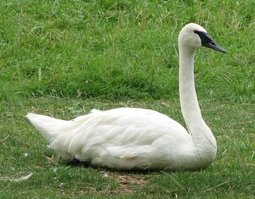
1     The swan is one of the biggest water birds. Even though they are big, swans are very graceful. They seem to glide over lakes and rivers. In the summer, swans eat grass and water weeds. They also eat insects. In winter, you may see them eating grain in fields. In the United States, there are only two species commonly seen. They are the trumpeter swan and the tundra swan. Tundra swans are the more common of the two.
 
2     In addition to these two native species, there are also some mute swans found in the United States. They were not native to the area. Some European settlers brought mute swans here when they immigrated to the United States. Mute swans are easily recognized. They have orange bills and a black knob of flesh at the base of the bill.
 
3     Both the trumpeter and tundra swans are white birds with black bills. The best way to tell them apart is by their calls. Trumpeters are named for their loud trumpet-like call. Tundra swans sound more like a Canada goose. Their call is higher pitched and quavering. Mute swans don't make loud calls. Mute means unable to speak. Mute swans hiss and make a growling sound.
 
4     Male and female swans are faithful to each other. They mate for life. They may live twenty years or more. Swans have big webbed feet to help them paddle along in the water. They waddle on land. They have more feathers than any other bird-about 25,000!

Paragraphs 5 to 13:
For the complete story with questions: click here for printable


Copyright © 2009 edHelper