edHelper.com
The 2000's
Nuclear Testing in North Korea


Nuclear Testing in North Korea
Reading Level
     edHelper's suggested reading level:   grades 6 to 8
     Flesch-Kincaid grade level:   8.62

Vocabulary
     challenging words:    atomic, destruction, output, radiation, ally, agreement, tested, better, negotiate, presence, successful, planes, explosion, unfair, weapon, power
     content words:    United States, World War II, United Kingdom, Nuclear Non-Proliferation Treaty, North Korea, Had North Korea, North Korean


Print Nuclear Testing in North Korea
     Print Nuclear Testing in North Korea  (font options, pick words for additional puzzles, and more)


Quickly Print - PDF format
     Quickly Print: PDF (2 columns per page)

     Quickly Print: PDF (full page)


Quickly Print - HTML format
     Quickly Print: HTML


Proofreading Activity
     Print a proofreading activity


Feedback on Nuclear Testing in North Korea
     Leave your feedback on Nuclear Testing in North Korea  (use this link if you found an error in the story)


Nuclear Testing in North Korea
By Sharon Fabian
  

1     Nuclear weapons have been around for a long time - since the 1940s when the United States ended World War II by dropping atomic bombs on the Japanese cities of Hiroshima and Nagasaki. After witnessing the destruction caused by those bombs, nearly everyone agreed that the world would be a better place if atomic weapons were never used again.
 
2     Still, major world powers continued to hold on to their nuclear weapons. The nuclear weapons were often considered deterrents, weapons that would never be used but would keep the bombs' owners safe from attack just by their presence. Five world powers have had nuclear weapons for some time - the United States, the United Kingdom, Russia, China, and France. Other countries, including India and Pakistan, have also tested nuclear weapons.
 
3     Nearly all countries in the world, including those that have nuclear weapons and those that don't, have agreed that it would be too dangerous to have nuclear weapons spread to more countries. In 1968, they made an agreement; it was called the Nuclear Non-Proliferation Treaty.
 
4     The treaty set out three international rules about nuclear weapons. The first rule was that nuclear weapons should not continue to spread. The second rule was that countries should work toward one day getting rid of nuclear weapons all together. The third rule was that all countries should have the right to use nuclear power peacefully to produce energy.
 
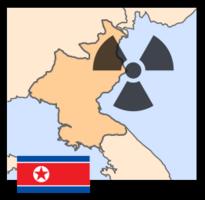
5     One hundred eighty-nine countries agreed to the treaty. India, Pakistan, and Israel did not. North Korea agreed at first, but later it withdrew from the treaty.

Paragraphs 6 to 14:
For the complete story with questions: click here for printable


Copyright © 2009 edHelper