edHelper.com
Famous Educators
Benjamin Bloom


Benjamin Bloom
Reading Level
     edHelper's suggested reading level:   grades 5 to 7
     Flesch-Kincaid grade level:   5.65

Vocabulary
     challenging words:    analysis, comprehension, synthesis, handball, info, based, affected, solution, environment, value, committee, recall, possible, preschool, schools, such
     content words:    Benjamin Bloom, Pennsylvania State University, Educational Objectives, Cognitive Domain, Developing Talent, Young People, Head Start, College Entrance Examination Board, American Educational Research Association


Print Benjamin Bloom
     Print Benjamin Bloom  (font options, pick words for additional puzzles, and more)


Quickly Print - PDF format
     Quickly Print: PDF (2 columns per page)

     Quickly Print: PDF (full page)


Quickly Print - HTML format
     Quickly Print: HTML


Proofreading Activity
     Print a proofreading activity


Feedback on Benjamin Bloom
     Leave your feedback on Benjamin Bloom  (use this link if you found an error in the story)


Benjamin Bloom
By Jennifer Kenny
  

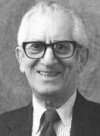
1     Who was Benjamin Bloom? Have you ever heard of him? Did you know his work might have affected what you are doing right now?
 
2     Bloom was born on February 21, 1913. As a child, he loved to read. He was quite curious. He even did lots of research. He earned degrees from Pennsylvania State University. He then earned a Ph. D. in Education from the University of Chicago. Bloom had a wife, Sophie, and two sons. He enjoyed handball and Ping-Pong, too.
 
3     Bloom was trained as an educational psychologist. He had been part of the Board of Examinations at the University of Chicago. He was also a professor of education there. Bloom had a hopeful outlook for education. Good schools made things possible for children.
 
4     In 1956, Bloom and others published Taxonomy of Educational Objectives: Handbook 1, The Cognitive Domain. From here came Bloom's Taxonomy. Throughout the world, this has been used to prepare materials. What did it do? It ordered thinking into six complex levels. Each level depended on the ones before it. This changed evaluation methods all over the world.

Paragraphs 5 to 15:
For the complete story with questions: click here for printable


Copyright © 2009 edHelper