edHelper.com
Savannah, Georgia: A City of Firsts


Savannah, Georgia: A City of Firsts
Reading Level
     edHelper's suggested reading level:   grades 5 to 7
     Flesch-Kincaid grade level:   7.76

Vocabulary
     challenging words:    backdrop, wide-open, original, warfare, founded, burning, slavery, cultural, series, union, besides, newly, public, settlement, income, being
     content words:    General James Oglethorpe, Yamacraw Bluff, Yamacraw Indians, Savannah Historic District, National Historic Downtown Districts, United States, King George II, Revolutionary War, Civil War, Union General William Sherman


Print Savannah, Georgia: A City of Firsts
     Print Savannah, Georgia: A City of Firsts  (font options, pick words for additional puzzles, and more)


Quickly Print - PDF format
     Quickly Print: PDF (2 columns per page)

     Quickly Print: PDF (full page)


Quickly Print - HTML format
     Quickly Print: HTML


Proofreading Activity
     Print a proofreading activity


Feedback on Savannah, Georgia: A City of Firsts
     Leave your feedback on Savannah, Georgia: A City of Firsts  (use this link if you found an error in the story)


Savannah, Georgia: A City of Firsts
By Joyce Furstenau
  

1     Besides being one of the first cities in the state of Georgia, Savannah was the first state capital of Georgia. General James Oglethorpe arrived on Yamacraw Bluff in 1733. He was greeted by a small band of Yamacraw Indians and two Indian traders. He founded the city of Savannah on that date.
 
2     The Savannah Historic District is one of the largest National Historic Downtown Districts in the United States. It was Oglethorpe who named the colony "Georgia." He named it after England's King George II. Oglethorp became friends with the Yamacraw chief named Tomochichi. They each pledged to help the other. The city of Savannah was soon thriving. It grew without any warfare as a result of this goodwill.
 
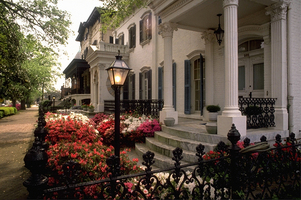
3     Savannah is known as America's first planned city. Oglethorpe laid the city out in a series of grids that allowed for wide-open streets. The buildings were mixed with shady public squares and parks.

Paragraphs 4 to 9:
For the complete story with questions: click here for printable


Copyright © 2009 edHelper