edHelper.com
Renaissance


Andrea del Verrocchio


Andrea del Verrocchio
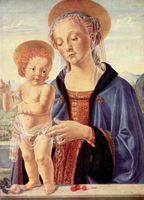
Reading Level
     edHelper's suggested reading level:   grades 6 to 8
     Flesch-Kincaid grade level:   9.13

Vocabulary
     challenging words:    goldsmith, necessarily, memorialize, best-known, adorn, wealthy, commission, successful, businessman, assistant, soldier, topped, receive, during, often, neither
     content words:    Santa Maria


Print Andrea del Verrocchio
edHelper.com subscriber options:
     Print Andrea del Verrocchio  (font options, pick words for additional puzzles, and more)

     Quickly print reading comprehension

     Print a proofreading activity


Feedback on Andrea del Verrocchio
     Leave your feedback on Andrea del Verrocchio  (use this link if you found an error in the story)


Andrea del Verrocchio
By Sharon Fabian
  

1     Young men of the Renaissance often became apprentices when they were ready to begin working. In their master's workshop, these young men learned everything they needed to know so that one day they, too, could become a master craftsman and open a shop of their own. Builders and many other tradesmen began their career this way.
 
2     During the Renaissance, artists also began their careers as apprentices in the shop of a skilled master. Like carpenters and blacksmiths, artists were craftsmen who held an important place in the business life of their community.
 
3     City governments, churches, and wealthy citizens hired these painters and sculptors to create pieces of art. Wealthy patrons hired painters to create portraits of family members. Churches commissioned altarpieces and frescoes to adorn the walls of new churches. Statues were commissioned to memorialize famous people and events.
 
4     The best-known artist's shop in the Renaissance city of Florence was the shop of Andrea del Verrocchio.
 
5     Verrocchio began his own career by receiving training as a goldsmith. Later, he moved on to sculpting in bronze and stone and to painting. Verrocchio also played music and worked in clay. He could always find a way to solve the problems that arose as he created the works of art that his patrons ordered.

Paragraphs 6 to 13:
For the complete story with questions: click here for printable


Copyright © 2008 edHelper