edHelper.com
National Parks and Monuments
Voyageurs National Park


Voyageurs National Park

A Short Reader

Reading Level
     edHelper's suggested reading level:   grades 3 to 5
     Flesch-Kincaid grade level:   3.93

Vocabulary
     challenging words:    northern, beavers, interesting, canoe, beaver, unique, describe, pounds, history, lived, packs, transport, between, weather, short, camp
     content words:    Voyageurs National Park, United States, Fur Trade, Ojibwa Indians, National Park


Print Voyageurs National Park
     Print Voyageurs National Park  (font options, pick words for additional puzzles, and more)


Quickly Print - PDF format
     Quickly Print: PDF (2 columns per page)

     Quickly Print: PDF (full page)


Quickly Print - HTML format
     Quickly Print: HTML


Proofreading Activity
     Print a proofreading activity


Feedback on Voyageurs National Park
     Leave your feedback on Voyageurs National Park  (use this link if you found an error in the story)


Voyageurs National Park
By Meg Leonard
  

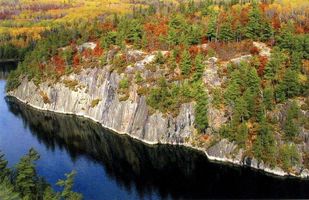
1     A unique national park is found in northern Minnesota. It is called Voyageurs National Park. It is on the border of the United States and Canada. The best way to explore this park is by boat. Almost half the park is water. There are four major lakes. Twenty-six more lakes can be found inside the park. There are more than five hundred islands. This area has an interesting history.
 
2     What is a voyageur? The word voyageur means "to travel" in French. During the Fur Trade, the word was used to describe a man who worked trading furs. Many of the voyageurs were French. They also came from other countries. This fur trade happened in the 1700s and 1800s. It was hard work. The voyageurs had to work for 14 hours each day. They collected beaver furs. They had to be able to carry heavy packs of fur between the many rivers and lakes. The packs were almost 100 hundred pounds each! They used canoes to transport the furs to the East. Beaver furs were used to make hats. At this time, beaver .....
For the complete story with questions: click here for printable


Copyright © 2009 edHelper