'); } var S; S=topJS(); SLoad(S); //-->
![]() edHelper.com |
Those Crusty Scabs are Gross |
| edHelper's suggested reading level: | grades 3 to 6 | |
| Flesch-Kincaid grade level: | 3.76 |
| Print Those Crusty Scabs are Gross (font options, pick words for additional puzzles, and more) |
| Quickly Print: PDF (2 columns per page) |
|
| Quickly Print: PDF (full page) |
| Quickly Print: HTML |
| Print a proofreading activity |
| Leave your feedback on Those Crusty Scabs are Gross (use this link if you found an error in the story) |
|
Those Crusty Scabs are Gross
By Joyce Furstenau |
|
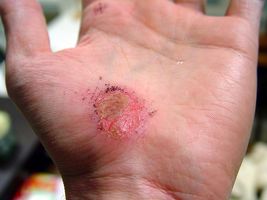
1 Accidents happen. Kids get hurt. Elbows get scraped and knees get cut. Ever spilled on gravel while riding your bike? Picking gravel out of a cut knee or your hand is no fun. When you cut yourself, you break the skin. Then you begin to bleed. Your body wants to stop the bleeding. It does this by forming a clot. There are little platelets (they actually look like little plates) in your blood that pile up when they come into contact with torn skin. These platelets release a special substance to stop the bleeding. The substance is called FIBRINOGEN. It makes something called FIBRIN to catch the loose blood cells. (Under a microscope, fibrin looks like the string that you spray out of a can.) Fibrin threads crisscross each other and form a kind of dam to trap the blood. This dam makes a solid plug, or clot. A clot that forms over a wound on the surface of your skin is called a scab.