edHelper.com
How Do Solar Cells Work?


How Do Solar Cells Work?
Reading Level
     edHelper's suggested reading level:   grades 6 to 8
     Flesch-Kincaid grade level:   7.84

Vocabulary
     challenging words:    phosphorus, silicon, utility, excess, controller, angled, electron, negative, nighttime, finding, hemisphere, satellite, commonly, energy, original, loss
     content words:    South Pole


Print How Do Solar Cells Work?
     Print How Do Solar Cells Work?  (font options, pick words for additional puzzles, and more)


Quickly Print - PDF format
     Quickly Print: PDF (2 columns per page)

     Quickly Print: PDF (full page)


Quickly Print - HTML format
     Quickly Print: HTML


Proofreading Activity
     Print a proofreading activity


Feedback on How Do Solar Cells Work?
     Leave your feedback on How Do Solar Cells Work?  (use this link if you found an error in the story)


How Do Solar Cells Work?
By Sharon Fabian
  

1     Solar energy is the most renewable form of energy of all. There is more solar energy coming at us than we will ever need. The problem, of course, is finding ways to capture and use that energy.
 
2     Scientists have been making solar cells to do just that since the 1800s. The first solar cell was created in 1883. It was about one percent efficient - no good for anything but experimenting in the lab.
 
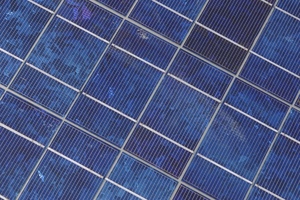
3     It wasn't until the energy crisis of the 1970s that scientists began to think seriously about using solar energy to produce power for our everyday needs. Today, solar cells are much more efficient than the original ones. Small solar cells power devices like watches and calculators. Solar cells can be combined in large groups called modules. Modules can be combined into even larger formations called arrays. In this way, solar energy can be used to provide power for everything from lights to home heating systems to satellites.
 
4     Whether in a small calculator or on the wing of a satellite, solar cells all work in about the same way. Solar cells are made of chemicals known as semiconductors, the same chemicals used in computer chips. Silicon is the chemical most commonly used in solar cells.
 
5     These chemicals have special properties. They are useful in solar cells because they absorb sunlight. This is due to the arrangement of their electrons. Like all atoms, silicon has electrons arranged in shells. In the case of silicon, the first two shells are filled, but the third shell is only half full. Since they have empty spaces, silicon atoms are always searching for electrons from other atoms to fill up those spaces. This movement of atoms begins to generate a current.

Paragraphs 6 to 11:
For the complete story with questions: click here for printable


Copyright © 2009 edHelper