edHelper.com
How Do Washers and Dryers Work?


How Do Washers and Dryers Work?
Reading Level
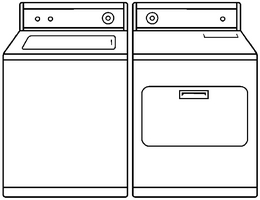
     edHelper's suggested reading level:   grades 6 to 8
     Flesch-Kincaid grade level:   7.83

Vocabulary
     challenging words:    built-in, lint, circulate, detergent, high-tech, dryer, element, electronic, technology, laundry, pump, during, method, especially, choice, control


Print How Do Washers and Dryers Work?
     Print How Do Washers and Dryers Work?  (font options, pick words for additional puzzles, and more)


Quickly Print - PDF format
     Quickly Print: PDF (2 columns per page)

     Quickly Print: PDF (full page)


Quickly Print - HTML format
     Quickly Print: HTML


Proofreading Activity
     Print a proofreading activity


Feedback on How Do Washers and Dryers Work?
     Leave your feedback on How Do Washers and Dryers Work?  (use this link if you found an error in the story)


How Do Washers and Dryers Work?
By Sharon Fabian
  

1     Sure, it seems like work when your mom makes you do your own laundry. But years ago when the electric washer and dryer first came into use, they seemed like the greatest work savers ever invented. Everyone wanted her own shiny new washer and dryer.
 
2     So, how did these new-fangled inventions work? What did they do that would replace the effort of washing by hand in a laundry tub and hanging the clothes out on a clothesline to dry?
 
3     Electric washers and dryers use the same basic method as the old wash tub and clothesline. They clean clothes by stirring them around in a tub of water and detergent and then blowing air through the clothes to dry them.
 
4     A clothes washer has an electric motor and plumbing that allows it to perform its four basic functions - fill, wash, drain, and spin. Its largest parts are two large tubs, an inner tub that is full of drain holes and an outer one that holds water. Inside the tubs is the agitator which circles back and forth to stir the clothes in the water.
 
5     The motor, which moves the agitator and also spins the inner tub, is attached at a gear box and also to a counter weight. In addition, the washing machine has a system of pulleys that support the weight. The weight and the pulleys prevent the whole machine from shaking when the inner tub full of heavy, wet clothes spins.

Paragraphs 6 to 13:
For the complete story with questions: click here for printable


Copyright © 2009 edHelper