edHelper.com
Black History and Blacks in U.S. History


Augusta Savage


Augusta Savage
Reading Level
     edHelper's suggested reading level:   grades 5 to 7
     Flesch-Kincaid grade level:   7.63

Vocabulary
     challenging words:    pagan, triumphant, teaching, well-known, continuous, founded, passion, busts, feisty, legacy, dedication, county, rejection, obstacle, receive, develop
     content words:    Augusta Savage, New York, Cooper Union, Herman MacNeil, Frederick Douglass, James Weldon Johnson, Rosenwald Fellowship, United States, Savage Studio, Harlem Community Art Center


Print Augusta Savage
edHelper.com subscriber options:
     Print Augusta Savage  (font options, pick words for additional puzzles, and more)

     Quickly print reading comprehension

     Print a proofreading activity


Feedback on Augusta Savage
     Leave your feedback on Augusta Savage  (use this link if you found an error in the story)


Augusta Savage
By Colleen Messina
  

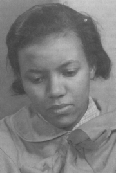
1     Some artists leave a legacy of paintings and sculptures. Others pass along their knowledge by teaching others. Augusta Savage, the African-American sculptor, was one of the rare artists who did both.
 
2     Augusta Savage was born on February 29, 1892, in Florida. Augusta loved clay. She knew that she wanted to become a sculptor when she grew up. Her father was a strict Methodist minister. He felt that clay figures were pagan, and he did not want his daughter to become a sculptor. When one of her clay figures won a prize at the county fair, Augusta knew that she wanted to become an artist. No one in her family supported her dream.
 
3     Augusta never gave up. She raised money to go to New York to receive training. She took classes at Cooper Union in 1921 and did laundry to support herself. Like many African-Americans, she faced continuous challenges in pursuing her dream, but feisty Augusta turned every obstacle into a stepping stone to success. In 1923, she was turned down for a summer art program because of her race. She decided to bring this issue to the public's attention. She made many people aware of the prejudice against African-American artists.

Paragraphs 4 to 8:
For the complete story with questions: click here for printable


Copyright © 2008 edHelper