edHelper.com
Johannes Kepler and the Mystery of Six-Cornered Snowflakes


Johannes Kepler and the Mystery of Six-Cornered Snowflakes
Reading Level
     edHelper's suggested reading level:   grades 6 to 8
     Flesch-Kincaid grade level:   7.17

Vocabulary
     challenging words:    planetary, inquiry, volume, dealing, honeycomb, fashion, astronomer, natural, equally, mathematics, mass, individual, complex, somewhat, based, bond
     content words:    Johannes Kepler, Six-Cornered Snowflake, Maria Mitchell


Print Johannes Kepler and the Mystery of Six-Cornered Snowflakes
     Print Johannes Kepler and the Mystery of Six-Cornered Snowflakes  (font options, pick words for additional puzzles, and more)


Quickly Print - PDF format
     Quickly Print: PDF (2 columns per page)

     Quickly Print: PDF (full page)


Quickly Print - HTML format
     Quickly Print: HTML


Proofreading Activity
     Print a proofreading activity


Feedback on Johannes Kepler and the Mystery of Six-Cornered Snowflakes
     Leave your feedback on Johannes Kepler and the Mystery of Six-Cornered Snowflakes  (use this link if you found an error in the story)


Johannes Kepler and the Mystery of Six-Cornered Snowflakes
By Cindy Grigg
  

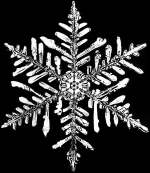
1     Johannes Kepler was a seventeenth-century scientist. He is best known for his laws dealing with the motion of planets. One winter day in 1611, Kepler gave a small book he had written to a friend as a gift. The book was called The Six-Cornered Snowflake. Kepler's book was the first scientific look at the structure of snow crystals. It is also the first record of a mathematical inquiry into natural forms or structures.
 
2     Kepler wondered why snowflakes fall as "six-cornered stars, tufted like feathers." He said there must be a cause, or some snowflakes would have five or seven corners. Kepler realized there were other things in nature with six sides. Each cell of a honeycomb, for example, is a hexagon. The seeds of a pomegranate, he noted, were also hexagonal in shape.
 
3     Kepler began to look for a cause. He wanted to solve the mystery of why snowflakes have six corners.

Paragraphs 4 to 10:
For the complete story with questions: click here for printable


Copyright © 2009 edHelper