edHelper.com
Plate Tectonics Theory


Plate Tectonics Theory

A Short Reader

Reading Level
     edHelper's suggested reading level:   grades 4 to 6
     Flesch-Kincaid grade level:   5.48

Vocabulary
     challenging words:    upper, molten, theory, material, opposite, lies, part, movement, simple, believe, form, crash, rigid, flow, affect, surface
     content words:    Himalaya Mountains


Print Plate Tectonics Theory
     Print Plate Tectonics Theory  (font options, pick words for additional puzzles, and more)


Quickly Print - PDF format
     Quickly Print: PDF (2 columns per page)

     Quickly Print: PDF (full page)


Quickly Print - HTML format
     Quickly Print: HTML


Proofreading Activity
     Print a proofreading activity


Feedback on Plate Tectonics Theory
     Leave your feedback on Plate Tectonics Theory  (use this link if you found an error in the story)


Plate Tectonics Theory
By Cindy Grigg
  

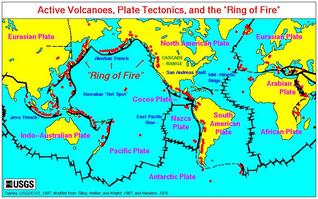
1     The earth's crust and the upper part of the mantle are known as the lithosphere. The lithosphere is solid and very firm, but it is not one whole piece. It is broken into sections called plates. There are eight major plates and some smaller ones. The places where these plates meet are called plate boundaries.
 
2     The plate tectonics theory explains how the continents drifted. It also explains how volcanoes, earthquakes, and mountains form. Plate tectonics is the study of the movement of Earth's crust. It's hard to imagine huge pieces of the earth's crust moving around, but they do. The movement is very small, though - only five to ten centimeters each year. What causes the plates to move? The simple answer is heat from inside the earth.
 
3     Under the lithosphere lies the asthenosphere. It is part of the earth's mantle. It is still solid, but it is much less firm. Geologists (scientists who study the earth) say that it has plasticity. It is soft because it is almost, but not quite, melted. This is magma, and it can flow like thick syrup. Geologists believe that the earth's plates move about on the asthenosphere like bubbles in a pan of hot water. Heat causes the magma to rise up in the mantle. When the molten magma meets the rigid material of the lithosphere, it moves across the surface horizontally. The magma begins to cool and sinks back down into the mantle. The cycle repeats.

Paragraphs 4 to 5:
For the complete story with questions: click here for printable


Copyright © 2009 edHelper