edHelper.com
Rocks and Minerals


Principles of Relative-Age Dating


Principles of Relative-Age Dating
Reading Level
     edHelper's suggested reading level:   high interest, readability grades 6 to 8
     Flesch-Kincaid grade level:   6.8

Vocabulary
     challenging words:    igneous, sedimentary, standing, inclusion, erosion, dating, intrusion, principle, granite, original, material, unique, layer, historic, based, geologists


Print Principles of Relative-Age Dating
edHelper.com subscriber options:
     Print Principles of Relative-Age Dating  (font options, pick words for additional puzzles, and more)

     Quickly print reading comprehension

     Print a proofreading activity


Feedback on Principles of Relative-Age Dating
     Leave your feedback on Principles of Relative-Age Dating  (use this link if you found an error in the story)


Principles of Relative-Age Dating
By Patti Hutchison
  

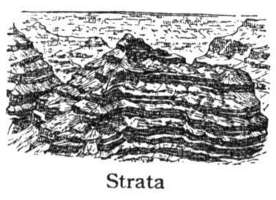
1     Have you ever heard the phrase "older than dirt"? Can anything be older than dirt? The answer is yes! Dirt is formed as layers of rock are eroded away. Some layers of rock are older than others. A process called relative-age dating helps scientists determine how old these rock layers are. This has also helped them to know how old the earth is.
 
2     Relative-age dating helps scientists put earth's historic events in order. They compare one event or rock layer to another. There are many principles that help scientists with this process.
 
3     One principle is called original horizontality. This simply means that sediments are usually deposited in horizontal layers. As the layers build up, they cement together to form sedimentary rocks.

Paragraphs 4 to 10:
For the complete story with questions: click here for printable


Copyright © 2008 edHelper