edHelper.com
Life Science
Animal and Biomes Basics Theme Unit
The Everglades


The Everglades
Reading Level
     edHelper's suggested reading level:   grades 6 to 8
     Flesch-Kincaid grade level:   9.48

Vocabulary
     challenging words:    excess, ecology, nonliving, erosion, survival, continental, directly, estimate, extinction, twentieth, natural, verge, original, environment, banks, broad
     content words:    United States, Florida Everglades, Kissimmee River, Lake Okeechobee, Seminole Indians, National Park, North America, Everglades National Park, World Heritage Site


Print The Everglades
     Print The Everglades  (font options, pick words for additional puzzles, and more)


Quickly Print - PDF format
     Quickly Print: PDF (2 columns per page)

     Quickly Print: PDF (full page)


Quickly Print - HTML format
     Quickly Print: HTML


Proofreading Activity
     Print a proofreading activity


Feedback on The Everglades
     Leave your feedback on The Everglades  (use this link if you found an error in the story)


The Everglades
By Cindy Grigg
  

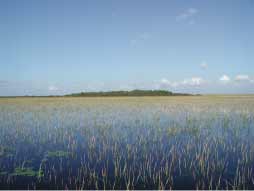
1     All the living things and nonliving things in a particular area make up an ecosystem. One very special ecosystem in the United States is the Florida Everglades. This wetland biome or ecosystem was formed by the Kissimmee River flowing into Lake Okeechobee and spilling southward over its banks, forming the broad Everglades wetlands. The water may only be a few inches deep, but it covers areas as wide as fifty miles.
 
2     The Seminole Indians called the Everglades "grassy water." Mostly what you see in the Everglades is saw grass. In a few places, trees grow where the land is slightly higher and drier. Water can be seen among the grasses. This area has the richest assortment of plants, animals, fish, snakes, amphibians, and insects found in the continental United States. Perhaps the most famous resident of the Everglades is the alligator.
 
3     Any changes in this delicate community affect all the different animals living there. The study of how living things interact with one another and with their environment is called ecology. Ecologists, scientists who study ecology, look at how all the living and nonliving factors in an ecosystem are related.

Paragraphs 4 to 8:
For the complete story with questions: click here for printable


Copyright © 2009 edHelper