'); } var S; S=topJS(); SLoad(S); //-->
![]() edHelper.com |
Dairy Food Group |
| edHelper's suggested reading level: | grades 5 to 7 | |
| Flesch-Kincaid grade level: | 6.94 |
| Print Dairy Food Group (font options, pick words for additional puzzles, and more) |
| Quickly Print: PDF (2 columns per page) |
|
| Quickly Print: PDF (full page) |
| Quickly Print: HTML |
| Print a proofreading activity |
| Leave your feedback on Dairy Food Group (use this link if you found an error in the story) |
|
Dairy Food Group
By Meg Leonard |
|
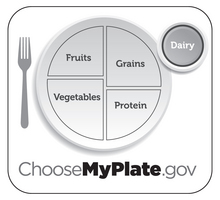
1 Foods in the dairy food group help your body in many ways. All fluid milk products and many foods made from milk are considered part of this food group. It is recommended that most foods eaten from this group be either non-fat or low-fat. If a food made from milk keeps its calcium content, such as cheese and yogurt, then it is part of the dairy food group. If a food made from milk does not keep its calcium content, such as butter, cream, or cream cheese, then it is not part of the dairy food group. Girls and boys ages nine to thirteen should eat or drink three cups of dairy each day. In most cases, one cup of a dairy group food counts as a one-cup serving. There are some exceptions to this rule. For example, one-and-one-half ounces of a hard cheese, such as cheddar or Swiss, one-third cup of shredded cheese, and two cups of cottage cheese all count as a one-cup serving of a dairy group food.![]() |
Create Weekly Reading Books
Prepare for an entire week at once! |