edHelper.com
Canadian Theme Unit


Sir Wilfrid Laurier: Unifying Canada


Sir Wilfrid Laurier: Unifying Canada
Reading Level
     edHelper's suggested reading level:   grades 6 to 7
     Flesch-Kincaid grade level:   8.1

Vocabulary
     challenging words:    appreciation, conscription, unrestricted, immigration, unpopular, legislature, unify, leadership, burning, orator, politics, knighthood, unity, victory, term, political
     content words:    While Sir John A., Sir Wilfred Laurier, When Wilfred, There Wilfred, McGill University, Parti Rouge, United States, Prime Minister Macdonald, Prime Minister, Diamond Jubilee


Print Sir Wilfrid Laurier: Unifying Canada
edHelper.com subscriber options:
     Print Sir Wilfrid Laurier: Unifying Canada  (font options, pick words for additional puzzles, and more)

     Quickly print reading comprehension

     Print a proofreading activity


Feedback on Sir Wilfrid Laurier: Unifying Canada
     Leave your feedback on Sir Wilfrid Laurier: Unifying Canada  (use this link if you found an error in the story)


Sir Wilfrid Laurier: Unifying Canada
By Mary Lynn Bushong
  

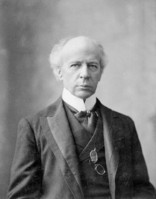
1     In any free country, people take sides with their ideas. Those with similar ideas group together. Those with similar ideas of how a young country should be run form political parties. While Sir John A. Macdonald was one of the greatest of the conservatives, Sir Wilfred Laurier was one of the greatest of the liberals.
 
2     Laurier was born in St. Lin, Quebec, on November 20, 1841. His father was an educated farmer who held public office in their town. When Wilfred was only 11, his father sent him to a neighboring town that was mainly English. There Wilfred stayed with an Irish family. He learned to not only speak English but to understand the English culture.
 
3     Later on he studied law at McGill University. He set up his law practice in Montreal when he was 23. Soon he also became active in politics.
 
4     Laurier supported the Liberal party, or "Parti Rouge," that was despised by the clergy. He won a seat in the legislature in 1871 but resigned it three years later.
 
5     Laurier came to the notice of his party's leadership when he defended Louis Riel's actions. When the position of party leader was open two years later, Laurier was chosen.

Paragraphs 6 to 14:
For the complete story with questions: click here for printable


Copyright © 2008 edHelper