edHelper.com
Black History and Blacks in U.S. History
A Nation Divided
(1840-1861)


Slave Codes


Slave Codes
Reading Level
     edHelper's suggested reading level:   high interest, readability grades 4 to 5
     Flesch-Kincaid grade level:   4.13

Vocabulary
     challenging words:    slave, ancestry, slavery, running, schedule, gain, jobs, escape, marriage, freedom, locked, owner, court, often, property, train
     content words:    African American, Civil War, African Americans, United States


Print Slave Codes
edHelper.com subscriber options:
     Print Slave Codes  (font options, pick words for additional puzzles, and more)

     Quickly print reading comprehension

     Print a proofreading activity


Feedback on Slave Codes
     Leave your feedback on Slave Codes  (use this link if you found an error in the story)


Slave Codes
By Cathy Pearl
  

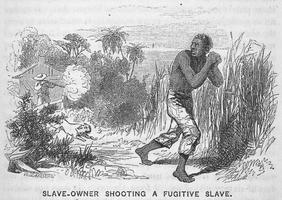
1     Slave owners did anything that they could to keep slaves from running away. They did not want the slaves to do or learn anything that might help them. One way the owners did this was with laws called slave codes.
 
2     Slave codes were laws that were passed in states in the South. The laws tried to keep slaves from running away or fighting back. Each state had different laws. But all of the laws had parts that were the same.
 
3     In the laws, the color line was very clear. If you had one African American person in your ancestry, you were black. It didn't matter how long ago that person had lived.
 
4     Whether or not you were a slave depended on what your mother was. If your mother was a slave, you were a slave. It didn't matter if your father was a free man. This made slavery permanent for any slave family. A child born to a slave was always a slave.
 
5     Slaves had very few legal rights. If slaves were badly treated, they couldn't bring charges against their owners. In court, they couldn't talk about a white man. They couldn't own any property. If they were attacked, the slaves could not hit a white person.

Paragraphs 6 to 13:
For the complete story with questions: click here for printable


Copyright © 2008 edHelper