edHelper.com
Black History and Blacks in U.S. History
A Nation Divided
(1840-1861)


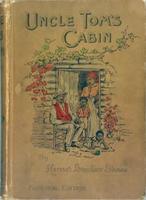
Uncle Tom's Cabin


Uncle Tom's Cabin
Reading Level
     edHelper's suggested reading level:   high interest, readability grades 4 to 5
     Flesch-Kincaid grade level:   4.12

Vocabulary
     challenging words:    writing, cruelty, slavery, preacher, totally, based, entire, runaway, lasted, important, false, narrative, cruel, personal, convince, danger
     content words:    Frederick Douglass, Harriet Beecher Stowe, Fugitive Slave Law, United States, In England, Uncle Tom, Simon Legree


Print Uncle Tom's Cabin
edHelper.com subscriber options:
     Print Uncle Tom's Cabin  (font options, pick words for additional puzzles, and more)

     Quickly print reading comprehension

     Print a proofreading activity


Feedback on Uncle Tom's Cabin
     Leave your feedback on Uncle Tom's Cabin  (use this link if you found an error in the story)


Uncle Tom's Cabin
By Cathy Pearl
  

1     Writing was very important to the people who fought against slavery. They used many different kinds of writing. The writing was a great way to get their ideas out to a lot of people. Newspapers, books, and pamphlets were popular.
 
2     One type of writing was a slave narrative. This was a personal story that told what it was like to live as a slave. This gave many people in the North their closest look at slavery.
 
3     The slave narratives were very popular. Frederick Douglass wrote one about his life as a slave. It sold thirty thousand copies. Other narratives were also popular. They also sold a lot of copies. The books were translated into different languages like French, German, and Russian.
 
4     A white woman wrote the book that would get the most attention. Her name was Harriet Beecher Stowe. Stowe, being white, was thought to be less threatening than an ex-slave. Her writing was a novel. It was called Uncle Tom's Cabin.
 
5     Stowe did not actively work against slavery. But she did have strong feelings against it. She had helped to hide runaway slaves in the past. When the Fugitive Slave Law was passed in 1850, Stowe decided she needed to do more.

Paragraphs 6 to 13:
For the complete story with questions: click here for printable


Copyright © 2008 edHelper