edHelper.com
Economics


All About Credit, Part 2


All About Credit, Part 2
Reading Level
     edHelper's suggested reading level:   grades 6 to 12
     Flesch-Kincaid grade level:   5.5

Vocabulary
     challenging words:    membership, disastrous, negative, rates, credit, agreement, majority, description, unexpected, economy, sales, consumer, banks, payment, accept, cash
     content words:    Great Depression


Print All About Credit, Part 2
edHelper.com subscriber options:
     Print All About Credit, Part 2  (font options, pick words for additional puzzles, and more)

     Quickly print reading comprehension

     Print a proofreading activity


Feedback on All About Credit, Part 2
     Leave your feedback on All About Credit, Part 2  (use this link if you found an error in the story)


All About Credit, Part 2
By Cindy Grigg
  

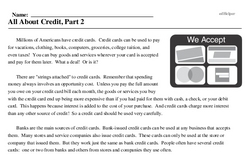
1     Millions of Americans have credit cards. Credit cards can be used to pay for vacations, clothing, books, computers, groceries, college tuition, and even taxes! You can buy goods and services wherever your card is accepted and pay for them later. What a deal! Or is it?
 
2     There are "strings attached" to credit cards. Remember that spending money always involves an opportunity cost. Unless you pay the full amount you owe on your credit card bill each month, the goods or services you buy with the credit card end up being more expensive than if you had paid for them with cash, a check, or your debit card. This happens because interest is added to the cost of your purchase. And credit cards charge more interest than any other source of credit! So a credit card should be used very carefully.
 
3     Banks are the main sources of credit cards. Bank-issued credit cards can be used at any business that accepts them. Many stores and service companies also issue credit cards. These cards can only be used at the store or company that issued them. But they work just the same as bank credit cards. People often have several credit cards: one or two from banks and others from stores and companies they use often.

Paragraphs 4 to 10:
For the complete story with questions: click here for printable


Copyright © 2008 edHelper