edHelper.com
Illnesses


Hereditary Hemochromatosis


Hereditary Hemochromatosis
Reading Level
     edHelper's suggested reading level:   grades 5 to 6
     Flesch-Kincaid grade level:   8.01

Vocabulary
     challenging words:    hereditary, swelling, controversy, excess, mutation, greatly, ultrasound, depression, formula, phlebotomy, possibility, maintain, negative, therefore, failure, genetic


Print Hereditary Hemochromatosis
edHelper.com subscriber options:
     Print Hereditary Hemochromatosis  (font options, pick words for additional puzzles, and more)

     Quickly print reading comprehension

     Print a proofreading activity


Feedback on Hereditary Hemochromatosis
     Leave your feedback on Hereditary Hemochromatosis  (use this link if you found an error in the story)


Hereditary Hemochromatosis
By Jennifer Kenny
  

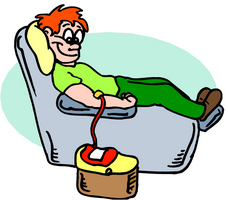
1     Hereditary hemochromatosis is quite a big name. Have you ever heard of it? It is a genetic disorder. As a result of the disease, the body absorbs and stores too much iron. Excess iron deposits are called iron overload. Too much iron can make the skin look bronze. Chroma means color; hemo means blood. Hence, the name of the disorder is hemochromatosis.
 
2     Iron is meant to be in the hemoglobin of red blood cells. Red blood cells carry oxygen throughout the body. People get iron from what they eat. The body, under the right conditions, absorbs ten percent of the iron in their diet. Too much iron, though, can cause serious health issues. For people with hereditary hemochromatosis that is a real possibility because their bodies absorb double what it should.
 
3     Excess iron doesn't exit the body. Instead, it is stored in the joints and organs. When the storage of the iron reaches toxic levels it can damage or destroy organs such as the liver or heart. It can also cause insulin resistant diabetes called bronze diabetes. Other complications include arthritis, depression, gallbladder disease, cirrhosis (scarring in the liver), or heart attack. Iron overload can lead to fatal conditions.

Paragraphs 4 to 10:
For the complete story with questions: click here for printable


Copyright © 2008 edHelper