edHelper.com
Illnesses
Gastroesophageal Reflux Disease


Gastroesophageal Reflux Disease
Reading Level
     edHelper's suggested reading level:   grades 5 to 6
     Flesch-Kincaid grade level:   6.77

Vocabulary
     challenging words:    happening, persistent, probe, refuses, sphincter, swallowing, life-threatening, burning, caffeine, esophagus, fatty, indigestion, short-term, trigger, lining, frequently


Print Gastroesophageal Reflux Disease
     Print Gastroesophageal Reflux Disease  (font options, pick words for additional puzzles, and more)


Quickly Print - PDF format
     Quickly Print: PDF (2 columns per page)

     Quickly Print: PDF (full page)


Quickly Print - HTML format
     Quickly Print: HTML


Proofreading Activity
     Print a proofreading activity


Feedback on Gastroesophageal Reflux Disease
     Leave your feedback on Gastroesophageal Reflux Disease  (use this link if you found an error in the story)


Gastroesophageal Reflux Disease
By Jennifer Kenny
  

1     GERD...sounds like a growl, doesn't it? It's actually a shorter way of saying gastroesophageal reflux disease. That's quite a mouthful, isn't it? You are probably wondering exactly what it is.
 
2     First, in order to understand GERD, you must understand a little bit about how the body works. Imagine you are eating some food. You chew it and swallow. The food slides down the swallowing tube, called the esophagus, and enters the stomach. In the stomach, acidic juices start to break down the food. In between the esophagus and the stomach, there's a muscle called a sphincter that acts like a gate. It lets the food into the stomach and then closes - keeping the food in the stomach and the stomach juices out of the esophagus. Sometimes, though, there's a problem. Sometimes the sphincter is weak; sometimes the sphincter opens at the wrong time. Then...you guessed it! Things leave the stomach the wrong way - back into the esophagus. This is known as reflux.
 
3     Many, many people experience reflux at one time or another. In fact, more than 60 million people in the U.S. have it at least once a month. This really isn't reason for concern. When this reflux occurs over two times a week and it is so persistent, it is considered GERD, or gastroesophageal reflux. Gastro means stomach. The rest of the term obviously refers to the esophagus. Reflux means flow back or return. It is estimated that around nineteen million suffer from GERD.
 
4     Those who suffer from GERD often feel a lot of discomfort. The most common feeling is that of heartburn, otherwise known as acid indigestion. That is often described as a burning sensation in the chest, neck, and throat. The feeling can last as long as two hours. Some people say it feels like food is coming back into the mouth causing a very bitter aftertaste. There might be a lot of burping. For others, there might even be the symptoms of wheezing and coughing.
 
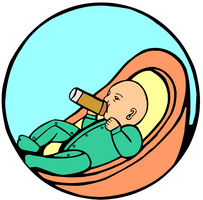
5     Even infants can suffer from GERD. In newborns, there can be vomiting and fussiness after feedings. Now you might be thinking that many infants experience fussiness, and that's true. However, this is not the occasional, normal spit up that a baby experiences. Instead, a baby with GERD can regurgitate quite forcefully. After a feeding, a baby with GERD may cry a lot and appear to be irritable and in pain. He or she may make wet burp sounds. This can affect the infant's ability to gain weight and sleep soundly.

Paragraphs 6 to 11:
For the complete story with questions: click here for printable


Copyright © 2009 edHelper