1 They look like the biggest fish in the world, but they are not fish. They have lungs and breathe air. They have large brains and live in family groups. They are cetaceans [set-AY-shuns].
2 Cetaceans are not fish. They are mammals. People are mammals, too, like dogs and cats. That means they do not lay eggs. They have live babies and feed them milk.
3 Cetaceans are whales, dolphins, and porpoises. They swim in oceans all over the world. There are around 80 different kinds of cetaceans.
4 Whales are very big. The largest is the blue whale. It grows to be 100 feet long and weighs 200 tons!
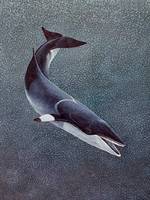
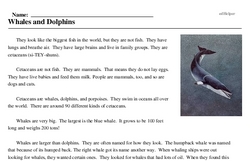
5 Whales are larger than dolphins. They are often named for how they look. The humpback whale was named that because of its humped back.
6 The right whale got its name another way. When whaling ships were out looking for whales, they wanted certain ones. They looked for whales big enough to make lots of oil. When they found this whale, it was the right one.
7 Most of the big whales do not have teeth. They use a filter called baleen [BAY-leen]. They filter mouthfuls of water. The krill get caught by the baleen. Krill are like tiny shrimp. Whales eat tons of krill every day. Some baleen whales also eat small fish like herring.
8 There is only one large toothed whale. It is the sperm whale. If you ever heard the story of Moby Dick, he was a white sperm whale. Sperm whales can eat fish. What they really like are giant squid. The squid like very deep water.
9 Whales use sound to sing and hunt. Whales use sonar to help them find squids. They send out a sound and then listen. How the sound waves come back gives them a picture of ocean floor. It could even give a picture of the squids.
Paragraphs 10 to 17:
For the complete story with questions: click here for printable