edHelper.com
Economics
Be a Comparison Shopper


Be a Comparison Shopper
Reading Level
     edHelper's suggested reading level:   grades 4 to 6
     Flesch-Kincaid grade level:   5.07

Vocabulary
     challenging words:    manufacturers, stale, sugary, unit, easily, especially, ingredient, supermarket, health, order, divide, compare, portion, often, goods, quality


Print Be a Comparison Shopper
     Print Be a Comparison Shopper  (font options, pick words for additional puzzles, and more)


Quickly Print - PDF format
     Quickly Print: PDF (2 columns per page)

     Quickly Print: PDF (full page)


Quickly Print - HTML format
     Quickly Print: HTML


Proofreading Activity
     Print a proofreading activity


Feedback on Be a Comparison Shopper
     Leave your feedback on Be a Comparison Shopper  (use this link if you found an error in the story)


Be a Comparison Shopper
By Cindy Grigg
  

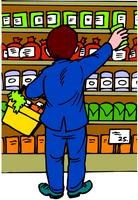
1     We all shop in stores. We are consumers. We buy goods and services. We want to get the most value for our money. To do that, we need to make good choices. If you go to the supermarket to buy some cereal, you have many, many choices. Which one is the best value?
 
2     One way to find the best buy is to comparison shop. When you shop this way, you compare different brands of a product. There are many things to compare in order to decide which is the best value for your money.
 
3     First, compare price. How much a product costs is important. A cheaper brand is often just as good as one that is more expensive. With cereal, for example, name brands often cost more than store brands because the "name" manufacturers spend more on advertising and packaging. And you know those "free" toys you sometimes get inside your cereal? Well, you can bet the manufacturer added the cost of the toy to the price you had to pay for the cereal. The cereal itself may not be all that different.
 
4     Next, compare size. Don't be fooled by the size of the package. When you're buying food, read the weight of the product. A smaller box of cereal might contain the same amount as a larger box of a different brand that costs more.
 
5     Figure out the unit price. Take a calculator with you when you shop. When comparing cereal, for instance, find out what the cost is per unit. Cereal is usually sold in boxes labeled in ounces or grams. Just divide the price by how many ounces or grams of cereal are in the box. That will give you the unit price. Then you can easily see which one costs less per unit.

Paragraphs 6 to 11:
For the complete story with questions: click here for printable


Copyright © 2009 edHelper