edHelper.com
Earth
Fault-Block Mountains and Valleys


Fault-Block Mountains and Valleys
Reading Level
     edHelper's suggested reading level:   high interest, readability grades 6 to 8
     Flesch-Kincaid grade level:   5.2

Vocabulary
     challenging words:    standing, erosion, rift, surrounding, associate, brittle, gradual, sunken, death, gravity, tension, spectacular, stress, force, base, rock
     content words:    Teton Range, Northwestern United States, Death Valley


Print Fault-Block Mountains and Valleys
     Print Fault-Block Mountains and Valleys  (font options, pick words for additional puzzles, and more)


Quickly Print - PDF format
     Quickly Print: PDF (2 columns per page)

     Quickly Print: PDF (full page)


Quickly Print - HTML format
     Quickly Print: HTML


Proofreading Activity
     Print a proofreading activity


Feedback on Fault-Block Mountains and Valleys
     Leave your feedback on Fault-Block Mountains and Valleys  (use this link if you found an error in the story)


Fault-Block Mountains and Valleys
By Patti Hutchison
  

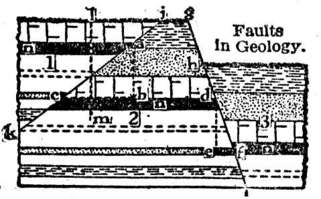
1     A fault is a crack in a rock. We usually associate faults with earthquakes. But did you know that faults could also form mountains?
 
2     Mountains are formed by processes called orogeny. This process usually takes place near plate boundaries. Movements at these boundaries place stress and tension on the crustal rocks. They are deformed by folding and faulting. Mountains are classified by the way they are formed.
 
3     Tensions at plate boundaries often form faults in the earth's crust. There are different types of faults. Normal faults are caused by horizontal tension. Part of the crust is uplifted, and part of it moves downward. This happens at the line where the rock is broken, called the fault plane. In an area where there are many faults, mountain ranges can form. These mountains are called fault-block mountains.
 
4     Fault-block mountains often occur where plates are moving apart. The movement causes the rocks to be stretched. Temperatures are low and the rocks are brittle. Instead of folding, they break into large blocks.

Paragraphs 5 to 11:
For the complete story with questions: click here for printable


Copyright © 2009 edHelper