edHelper.com
After the Civil War
(1865-1870)

The Start of the Ku Klux Klan


The Start of the Ku Klux Klan
Reading Level
     edHelper's suggested reading level:   high interest, readability grades 3 to 5
     Flesch-Kincaid grade level:   3.87

Vocabulary
     challenging words:    violent, social, mainly, tests, whatever, possible, defend, several, against, power, government, court, stayed, often, lived, vote
     content words:    Civil War, Ku Klux Klan, President Grant


Print The Start of the Ku Klux Klan
     Print The Start of the Ku Klux Klan  (font options, pick words for additional puzzles, and more)


Quickly Print - PDF format
     Quickly Print: PDF (2 columns per page)

     Quickly Print: PDF (full page)


Quickly Print - HTML format
     Quickly Print: HTML


Proofreading Activity
     Print a proofreading activity


Feedback on The Start of the Ku Klux Klan
     Leave your feedback on The Start of the Ku Klux Klan  (use this link if you found an error in the story)


The Start of the Ku Klux Klan
By Cathy Pearl
  

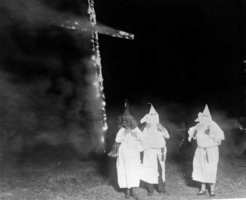
1     Blacks gained more rights after the Civil War. But blacks and whites were still not equal. Groups were forming to fight back against some of the rights that blacks had gained after the Civil War.
 
2     One of these groups was the Ku Klux Klan or KKK. This group was formed by six men in Tennessee. It was 1866. The name came from the Greek word "kuklos," which means circle.
 
3     At first, the group was supposed to be just a social group. Soon it turned to more violent actions. At first the actions were almost like practical jokes. Later the group became deadly.
 
4     The KKK wanted to defend whites against blacks. It saw the white race as the better race. The rights that blacks had gained after the Civil War made members of the group angry. The KKK was their way of fighting back.
 
5     Most of the members were men who were once part of the Confederate army. Other members were plantation owners. These men were usually not part of the government. Most of them were angry at how Republicans in the government had treated the South after the war.

Paragraphs 6 to 12:
For the complete story with questions: click here for printable


Copyright © 2009 edHelper