edHelper.com
Canadian Theme Unit


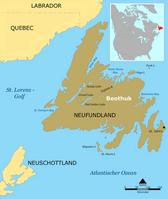
The Beothuk: A Lost Culture


The Beothuk: A Lost Culture
Reading Level
     edHelper's suggested reading level:   grades 6 to 7
     Flesch-Kincaid grade level:   6.35

Vocabulary
     challenging words:    clout, indigenous, covering, ochre, individuality, humpback, insulation, prime, impressed, caribou, description, purpose, tuberculosis, original, layer, unknown
     content words:    North America, Canadian First Nations, Gaspar Corte-Real, First Nations


Print The Beothuk: A Lost Culture
edHelper.com subscriber options:
     Print The Beothuk: A Lost Culture  (font options, pick words for additional puzzles, and more)

     Quickly print reading comprehension

     Print a proofreading activity


Feedback on The Beothuk: A Lost Culture
     Leave your feedback on The Beothuk: A Lost Culture  (use this link if you found an error in the story)


The Beothuk: A Lost Culture
By Mary Lynn Bushong
  

1     It has never been easy for the indigenous people of North America to deal with Europeans. Most lost land, people, and their way of life. A few have kept their individuality. Yet, out of all the Canadian First Nations tribes, all have some modern representatives except one. That one is the Beothuk [Bay-o-thuck].
 
2     The Beothuk were native to Newfoundland. It is thought that they moved to the island around 50 B.C. They were the only tribe residing on the island, although the Micmacs sometimes visited it. The two tribes were often unfriendly to each other, so the Micmacs were not encouraged to stay. This meant that the Beothuk had no close allies to help them when trouble came later on.
 
3     The ancient Vikings met the Beothuk when they tried to settle northern Newfoundland in A.D. 1000. They called the red painted people skraelings.
 
4     It was the Beothuk who met the earliest Portuguese explorers. The first one to arrive was Gaspar Corte-Real in 1500. He was so impressed with the Beothuk that he captured 57 of them to sell as slaves.

Paragraphs 5 to 14:
For the complete story with questions: click here for printable


Copyright © 2008 edHelper