edHelper.com
The United States Grows
(1865-1900)


Monopolies, Cartels, and Trusts


Monopolies, Cartels, and Trusts
Reading Level
     edHelper's suggested reading level:   high interest, readability grades 5 to 6
     Flesch-Kincaid grade level:   5.94

Vocabulary
     challenging words:    monopoly, author, depression, court, industry, government, economy, company, join, become, country, price, fell, fight, against, return
     content words:    John Sherman, Sherman Antitrust Act, Civil War, Samuel Dodd, Antitrust Act, United States


Print Monopolies, Cartels, and Trusts
edHelper.com subscriber options:
     Print Monopolies, Cartels, and Trusts  (font options, pick words for additional puzzles, and more)

     Quickly print reading comprehension

     Print a proofreading activity


Feedback on Monopolies, Cartels, and Trusts
     Leave your feedback on Monopolies, Cartels, and Trusts  (use this link if you found an error in the story)


Monopolies, Cartels, and Trusts
By Cathy Pearl
  

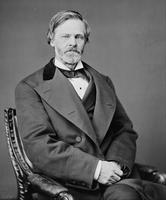
1     Caption: John Sherman, author of the Sherman Antitrust Act
 
2     After the Civil War, industries in this country began to grow quickly. Many of the men who owned these companies were honest. Others did anything that they could to make more money.
 
3     Business owners tried to pay as little as they could for the supplies they needed. They would pay their workers less money so that the owners could earn more. Some business owners tried to control their whole industry.
 
4     There were company owners who tried to start a monopoly. A monopoly is when one company completely controls a product. This company is the only one who [that] makes or sells it.
 
5     When there is a monopoly, the company can set any price that it wants to for the product. People have to buy it at that price because no other company sells it. The company can charge a lot of money. This means the owner of the company is going to make even more money.
 
6     Business owners had different ways of starting monopolies. The owner bought all the other companies that made the same item. Or he made other businesses close. Many owners did these things and more in order to have a monopoly.
 
7     At the end of the 1800s, laws were passed to stop monopolies. The laws were also supposed to break up monopolies that were already formed. But the law didn't work well. People in government did not want to fight with business leaders. The leaders were very strong. Business owners who had formed a monopoly always fought against new laws.
 
8     Monopolies weren't the only way that businesses tried to make more money. They also formed cartels. A cartel is a group of businesses that make the same product.

Paragraphs 9 to 16:
For the complete story with questions: click here for printable


Copyright © 2008 edHelper