edHelper.com
Native Americans
Women's History


Wilma P. Mankiller: First Woman Chief of an American-Indian Nation


Wilma P. Mankiller: First Woman Chief of an American-Indian Nation
Reading Level
     edHelper's suggested reading level:   grades 5 to 6
     Flesch-Kincaid grade level:   7.77

Vocabulary
     challenging words:    occupation, civilian, founded, bullied, participate, leadership, twentieth, important, tribe, alongside, natural, reservation, death, tires, government, leader
     content words:    Native Americans, Wilma Mankiller, San Francisco, No Indians, Alcatraz Island, San Francisco Bay, Native American, Indian Adult Education, Cherokee Nation, Cherokee Community Development Department


Print Wilma P. Mankiller: First Woman Chief of an American-Indian Nation
edHelper.com subscriber options:
     Print Wilma P. Mankiller: First Woman Chief of an American-Indian Nation  (font options, pick words for additional puzzles, and more)

     Quickly print reading comprehension

     Print a proofreading activity


Feedback on Wilma P. Mankiller: First Woman Chief of an American-Indian Nation
     Leave your feedback on Wilma P. Mankiller: First Woman Chief of an American-Indian Nation  (use this link if you found an error in the story)


Wilma P. Mankiller: First Woman Chief of an American-Indian Nation
By Joyce Furstenau
  

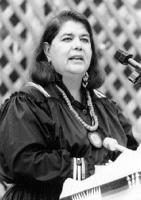
1     The Cherokee are an important tribe of Native Americans that live in the area around Oklahoma. Many years ago the person in charge of protecting a Cherokee village was given the name Mankiller. Wilma Mankiller was born in Tahlequah, Oklahoma, in 1943. She lived on the Cherokee reservation. For the first ten years of her life, she had no indoor plumbing or electricity.
 
2     The government moved Wilma's family to San Francisco in 1953. They wanted to move Indians from their remote villages into larger cities. The move was an eye opening experience for Wilma. She had never seen television, elevators, bicycles, or indoor toilets. She also had never been exposed to prejudice. Wilma saw signs in restaurants that said, "No dogs. No Indians." She was unhappy at school. Wilma was teased and bullied because of her name and her heritage. She felt very isolated in her new community. She ran away from home several times. She began to use her fists to defend herself.
 
3     By the time she was seventeen, Wilma was married. She spent the next few years raising her two daughters. In 1969 a group of Native Americans occupied Alcatraz Island, which was a former prison site in the San Francisco Bay area. They wanted to bring attention to the poor treatment of Indians. Wilma became interested in this movement.

Paragraphs 4 to 10:
For the complete story with questions: click here for printable


Copyright © 2008 edHelper