edHelper.com
Geography
Mapping the Earth's Surface


Mapping the Earth's Surface
Reading Level
     edHelper's suggested reading level:   high interest, readability grades 6 to 8
     Flesch-Kincaid grade level:   5.72

Vocabulary
     challenging words:    interval, topography, spherical, representation, distort, contour, drawback, projection, explanation, route, legend, proportion, cylindrical, likely, indicate, globe
     content words:    New York City


Print Mapping the Earth's Surface
     Print Mapping the Earth's Surface  (font options, pick words for additional puzzles, and more)


Quickly Print - PDF format
     Quickly Print: PDF (2 columns per page)

     Quickly Print: PDF (full page)


Quickly Print - HTML format
     Quickly Print: HTML


Proofreading Activity
     Print a proofreading activity


Feedback on Mapping the Earth's Surface
     Leave your feedback on Mapping the Earth's Surface  (use this link if you found an error in the story)


Mapping the Earth's Surface
By Patti Hutchison
  

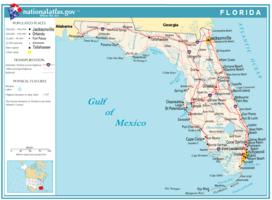
1     What's the best way to get from New York City to Miami? To find your route, you would probably look on a road map. It will show all major roads that run between these two cities. A road map is a very useful tool, but did you know that there are other kinds of maps as well?
 
2     Maps give us much information. There is one drawback, however. Maps are flat. The Earth is not. Maps can be very accurate, but they are only projections. A projection is a representation of a three dimensional object on a flat surface. Sort of like a photograph of you and your friends.
 
3     There are different ways to project the Earth's surface onto a map. One type is called the cylindrical projection. It is also sometimes called a Mercator projection. Another type is called the conic projection. Still another is called the azimuthal projection. Each one is useful in its own way. However, each can distort either the size or the shape of the landmasses. It is not easy to draw a three-dimensional object on a flat piece of paper!

Paragraphs 4 to 10:
For the complete story with questions: click here for printable


Copyright © 2009 edHelper