edHelper.com
Nutrition
Milk Nutrition


Milk Nutrition
Reading Level
     edHelper's suggested reading level:   grades 4 to 6
     Flesch-Kincaid grade level:   7.3

Vocabulary
     challenging words:    calcium, cardiovascular, diphtheria, formula, immunity, intolerance, lactose, potassium, separation, sulfur, thereafter, tuberculosis, version, diagnosis, general, valuable
     content words:    United States


Print Milk Nutrition
     Print Milk Nutrition  (font options, pick words for additional puzzles, and more)


Quickly Print - PDF format
     Quickly Print: PDF (2 columns per page)

     Quickly Print: PDF (full page)


Quickly Print - HTML format
     Quickly Print: HTML


Proofreading Activity
     Print a proofreading activity


Feedback on Milk Nutrition
     Leave your feedback on Milk Nutrition  (use this link if you found an error in the story)


Milk Nutrition
By Jennifer Kenny
  

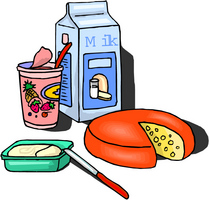
1     Every parent has encouraged a child to drink his milk. Why is drinking milk so important? Why are there so many milk choices in the supermarket? Why don't some people enjoy milk? These are interesting questions.
 
2     First and foremost, mother mammals produce milk to feed their babies. This includes human moms. For at least the first twelve months of life, breast milk is usually the best choice. It has antibodies from the mother which aid immunity. Formula would be second choice. Milk from the store is never advised until a child reaches his first birthday.
 
3     After a year, people typically drink milk from other mammals, most often a cow. Cow's milk is the most common kind of milk drunk in the United States. Children from ages one to two should drink whole milk because they need the fat from the whole milk for other things such as neurological development. After age two, as long as the doctor says it is fine to do so and the child is growing steadily, reduced-fat milk comes next.

Paragraphs 4 to 10:
For the complete story with questions: click here for printable


Copyright © 2009 edHelper