
Worksheets and No Prep Teaching Resources
Reading Comprehension Worksheets
|
Worksheets and No Prep Teaching Resources Reading Comprehension Worksheets |
|
| edHelper's suggested reading level: | grades 4 to 6 | |
| Flesch-Kincaid grade level: | 6.43 |
|
Poland - Culture (Nicolaus Copernicus)
By Ekaterina Zhdanova-Redman |
|
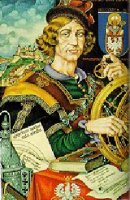 1 Poland has a rich culture. Its culture stretches back hundreds of years. It includes some famous people, places, and things. One of Poland's most famous citizens is a man who changed the world. This man understood important things about our world, our solar system, and our universe. Many thought he was crazy. Others thought he was a genius. Some even thought he was the devil. This man's name was Nicolaus Copernicus.
 |
Create Weekly Reading Books
Prepare for an entire week at once! |
| Leave your feedback on Poland - Culture (Nicolaus Copernicus) (use this link if you found an error in the story) |