| 1. |
This reptile is related to the crocodile. It has a rounded snout. Its lower teeth cannot be seen when this animal closes its mouth.
alligator |
|
| 2. |
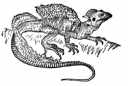
This lizard is named for an imaginary snake-like monster that could kill with its breath or a glance from its evil eyes! Despite its scary name, this lizard is actually harmless. It is best known for its ability to run on its back legs.
_________________ |
|
| 3. |
This is the largest lizard on earth! It can only be found on four small islands of Indonesia. The saliva of this animal contains deadly bacteria. Even when its victim is able to run away from an ambush, the unlucky animal dies hours or days later from the infected wounds.
_________________ |
|
| 4. |
The third month of the calendar year. This month has thirty-one days.
_________________ |
|
| 5. |
This reptile is a member of the crocodilian family. It is the largest reptile in the world! One of the differences between this reptile and its close relative, the alligator, is its snout. This reptile has a pointed snout whereas an alligator has a rounded one.
_________________ |
|
| 6. |
This lizard is a great disguise master! It can change colors! It has a very long tongue – about the same length as its body! When it hunts, it flicks out its sticky-tipped tongue to capture prey.
_________________ |
|
| 7. |
This snake is poisonous! Before it attacks, it rears up and spreads its hood. When a "snake charmer" plays his flute, this snake rises up from a basket, spreads its hood, and sways with the music.
_________________ |
|
| 8. |
Members of this nonpoisonous snake family have strong, muscular bodies. They squeeze their prey to death before swallowing it whole! They are not boas. One of them is the longest snake in the world!
_________________ |
|
| 9. |
This snake is venomous (poisonous). This snake has dry, scaly rings on the tip of its tail. When shaken, its tail makes a buzzing sound.
_________________ |
|
| 10. |
The twelfth month of the calendar year. This month has thirty-one days.
_________________ |
|
| 11. |
The tenth month of the calendar year. This month has thirty-one days.
_________________ |
|
| 12. |
When a predator threatens this Australian lizard, it raises its large frill around its neck, opens its mouth, and makes a hissing sound. All these actions are actually just bluffs! Even though this lizard appears to be dangerous, it is not harmful at all.
_________________ |
|
| 13. |
This small, tropical lizard can walk upside down on smooth surfaces without falling. The pads on this lizard's feet allow the animal to have a good grip on surfaces even when it is walking upside down.
_________________ |
|
| 14. |
Unlike other lizards, members of this lizard family are vegetarians! They can grow quite big. This lizard group is found mostly in the Americas.
_________________ |
|
| 15. |
This group of freshwater turtles is best known for its bad temper, long neck, and strong jaw. When they bite, they do not let go easily!
_________________ |
|
| 16. |
This snake lives in the jungles of South America. It usually hides in rivers. When it hunts, it coils its powerful, muscular body around its prey and squeezes the victim to death! Although this is the heaviest snake in the world, it is not the longest one!
_________________ |
|
| 17. |
This snake family is not poisonous. Like pythons, members of this snake family wrap their muscular bodies around their prey and squeeze the victim to death! Unlike pythons, members of this snake family do not lay eggs. Instead, they give birth to live young.
_________________ |
|
| 18. |
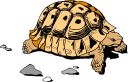
This tortoise lives in deserts. It spends as much as 90% of its lifetime hiding underground. During the hot summer months, it stays underground to remain cool. During the cold winter months, it stays underground to take a long nap (hibernate).
_________________ |
|
| 19. |
This specific term is used to refer to turtles that live entirely on land. Such turtles have heavier, higher domed shells than their water-dwelling cousins.
_________________ |
|
| 20. |
The season between winter and summer. Many plants may begin to bud and grow leaves and flowers during this season.
_________________ |
|
| 21. |
The ____________ sea turtle is the largest turtle in the world! A grown one can reach 8 feet in length and weigh over 1,300 pounds! Its carapace, or protective hard shell, has a leathery texture.
_________________ |
|
| 22. |
A chart that contains a listing of the days, weeks, and months of the year.
_________________ |
|