
Worksheets and No Prep Teaching Resources
Reading Comprehension Worksheets
Inventors and Inventions

Inventors and Inventions
|
Worksheets and No Prep Teaching Resources Reading Comprehension Worksheets Inventors and Inventions |
Inventors and Inventions |
| edHelper's suggested reading level: | grades 8 to 9 | |
| Flesch-Kincaid grade level: | 7.9 |
|
Granville T. Woods
By Sharon Fabian |
|
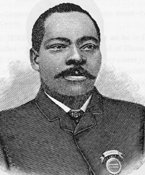 1 In the second half of the 1800s, railroad transportation was booming. Americans were traveling by rail. Both the North and the South had used railroads to transport troops in the Civil War. In 1869, the long awaited Transcontinental Railroad was finally completed when the final spike was driven in at Promontory Point, Utah. On the East Coast, railway travel was becoming popular. Railroad lines were extended to carry more and more passengers. By the late 1800s, there were about 200,000 miles of track in the United States.
 |
Create Weekly Reading Books
Prepare for an entire week at once! |
| Leave your feedback on Granville T. Woods (use this link if you found an error in the story) |
|
Inventors and Inventions
|
 |
High School Reading Comprehensions and High School Reading Lessons
|
 |
Social Studies
|