
Worksheets and No Prep Teaching Resources
Reading Comprehension Worksheets
Ancient China
History of Books and Writing

Ancient China
|
Worksheets and No Prep Teaching Resources Reading Comprehension Worksheets Ancient China History of Books and Writing |
Ancient China |
| edHelper's suggested reading level: | grades 9 to 12 | |
| Flesch-Kincaid grade level: | 8.58 |
|
Classy Chinese Characters
By Colleen Messina |
|
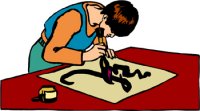 1 According to ancient Chinese legends, the mythical Yellow Emperor invented many things from silkworm farms to music. He had an equally brilliant (although scary-looking) official. Ts'ang Chien had the face of a dragon and four-eyes! With all those eyes, he was especially observant. Ts'ang Chien invented Chinese writing, and he modeled the characters after patterns he saw in nature, such as the constellations of stars, the patterns on a turtle's back, and the footprints of birds. In a strange turn of mythical events, all the nature spirits sobbed when Ts'ang Chien revealed their patterns so publicly!
 |
Create Weekly Reading Books
Prepare for an entire week at once! |
| Leave your feedback on Classy Chinese Characters (use this link if you found an error in the story) |
|
Ancient China
|
 |
History of Books and Writing
|
 |
High School Reading Comprehensions and High School Reading Lessons
|
 |
Art Theme Unit: Reading Comprehensions
|
 |
Social Studies
|