edHelper.com
History of Books and Writing


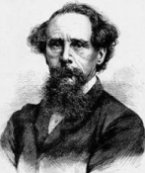
Charles Dickens


Charles Dickens
Reading Level
     edHelper's suggested reading level:   grades 9 to 12
     Flesch-Kincaid grade level:   8.27

Vocabulary
     challenging words:    drawing-room, ex-girlfriend, expressive, free-lance, installments, journalistic, Micawber, miserly, Nickleby, querulous, unsuited, youthful, sickly, insecure, novelty, dismal
     content words:    Charles Dickens, David Copperfield, Great Expectations, Elizabeth Dickens, John Dickens, Naval Pay Office, Commons Courts, Maria Beadnell, Catherine Hogarth, Pickwick Papers


Print Charles Dickens
edHelper.com subscriber options:
     Print Charles Dickens  (font options, pick words for additional puzzles, and more)

     Quickly print reading comprehension

     Print a proofreading activity


Feedback on Charles Dickens
     Leave your feedback on Charles Dickens  (use this link if you found an error in the story)


Charles Dickens
By Colleen Messina
  

1     In a dismal factory in nineteenth century England, a small boy worked hard because his father was in prison. The terrible memories of that dreary place haunted him for the rest of his life. The boy eventually became one of England's greatest novelists and humorists. His name was Charles Dickens, and his experiences in the factory inspired memorable passages in two of his most famous books, David Copperfield and Great Expectations.
 
2     Charles Dickens was born on February 7, 1812, to John and Elizabeth Dickens. He had remarkable powers of observation as a young child and always remembered his whitewashed house and the colorful gardens in Landport, England. He and his older sister often watched soldiers practice their drills in town. Charles was a sickly little boy who had such violent spasms that he couldn't participate in marbles or prisoner's base, two of his friends' favorite games. His bad health made him an avid reader, which is how young Charles spent his time. His mother taught him the alphabet, and he loved "the fat, black letters in the primer, the puzzling novelty of their shapes, and the easy, good nature of O and S." His early fascination with letters helped him write fascinating stories when he grew up.
 
3     His father, John Dickens, was a Naval Pay Office clerk and a miserable businessman. He was imprisoned for debt in 1824. His family went with him to prison, except for Charles, who worked in a blacking factory. Charles pasted printed labels on black pots for six shillings a week. He was miserable. He was so poor that when he received his shillings, he put an equal amount of money in seven envelopes to make his salary last the whole week. Eventually, the family overcame their financial problems, but Charles's had to remain at his factory job. Remember, in the nineteenth century, everyone thought of children as small adults who were capable of constant work. His mother probably wanted more money for the household! Charles's father, who perhaps felt guilty that his son had to carry the family burden for so long, rescued Charles from his wretched job. Charles then went to school in London until 1827.
 
4     When Charles was fifteen, he became an assistant at an attorney's office. He had learned how to work hard in the factory, so at night, he diligently studied shorthand. Charles was determined to make something of himself! In 1829, he became a free-lance reporter at Doctor's Commons Courts and eventually, his nighttime studies made him a successful shorthand reporter of debates in Parliament. He also wrote stories for a newspaper.

Paragraphs 5 to 11:
For the complete story with questions: click here for printable


Copyright © 2008 edHelper