
Worksheets and No Prep Teaching Resources
Reading Comprehension Worksheets
Ancient Greece

Ancient Greece
|
Worksheets and No Prep Teaching Resources Reading Comprehension Worksheets Ancient Greece |
Ancient Greece |
| edHelper's suggested reading level: | grades 5 to 7 | |
| Flesch-Kincaid grade level: | 6.71 |
|
Socrates
By Vickie Chao |
|
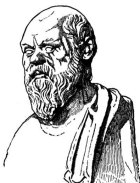 1 Ancient Greece had many famous philosophers. Among them, Socrates is perhaps the most famous, but the least understood. The reason for that is because Socrates never wrote anything down. After he died in 399 B.C., many of his supporters (such as Plato, Aristotle, and Xenophon) tried to preserve his memory, so they wrote books about him. In their work, they liked to portray him doing what he was known best for -- making conversation. They published his dialogues and kept his ideas floating. But since those sources were not first-hand and were often conflicting, it is impossible to tell if they truly reflected Socrates' views.
 |
Create Weekly Reading Books
Prepare for an entire week at once! |
| Leave your feedback on Socrates (use this link if you found an error in the story) |
|
Ancient Greece
|
 |
Social Studies
|