
Worksheets and No Prep Teaching Resources
Reading Comprehension Worksheets
Ancient China

Ancient China
|
Worksheets and No Prep Teaching Resources Reading Comprehension Worksheets Ancient China |
Ancient China |
| edHelper's suggested reading level: | grades 8 to 12 | |
| Flesch-Kincaid grade level: | 7.76 |
|
Zhang Qian & The Silk Road
By Vickie Chao |
|
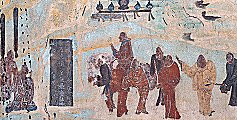 1 Looking back in history, China has not often had a stable relationship with its neighbors. Sometimes, the relationship was calm and harmonic. Other times, it was tense and edgy. Of all its neighbors, however, those that dwelled north of China were the most threatening. To fend them off, Chinese emperors tried various approaches, such as ordering the construction of the Great Wall of China, waging wars, and giving away money and valuable goods. Interestingly, it was through one of those tactics undertaken by Zhang Qian that led to the establishment of the Silk Road.
 |
Create Weekly Reading Books
Prepare for an entire week at once! |
| Leave your feedback on Zhang Qian & The Silk Road (use this link if you found an error in the story) |
|
Ancient China
|
 |
High School Reading Comprehensions and High School Reading Lessons
|
 |
Social Studies
|