
Worksheets and No Prep Teaching Resources
Reading Comprehension Worksheets
Ancient Greece

Ancient Greece
|
Worksheets and No Prep Teaching Resources Reading Comprehension Worksheets Ancient Greece |
Ancient Greece |
| edHelper's suggested reading level: | grades 9 to 11 | |
| Flesch-Kincaid grade level: | 9.75 |
|
Hipparchus
By Vickie Chao |
|
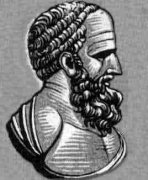 1 Suppose we could travel back in time to note the positions of all the stars relative to the Earth. We then compare our observations with the current positions of those stars. Right away, we would notice that the positions of the stars have actually shifted systematically. This strange phenomenon is caused by a cyclic wobbling in the orientation of the Earth's axis of rotation. The entire cycle takes about 26,000 years to complete.
 |
Create Weekly Reading Books
Prepare for an entire week at once! |
| Leave your feedback on Hipparchus (use this link if you found an error in the story) |
|
Ancient Greece
|
 |
High School Reading Comprehensions and High School Reading Lessons
|
 |
Social Studies
|