
Worksheets and No Prep Teaching Resources
Reading Comprehension Worksheets
Ancient China
Ancient China
|
Worksheets and No Prep Teaching Resources Reading Comprehension Worksheets Ancient China |
Ancient China |
| edHelper's suggested reading level: | grades 8 to 10 | |
| Flesch-Kincaid grade level: | 9.15 |
|
Sima Qian
By Vickie Chao |
|
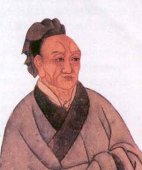 1 The Chinese have always been fond of writing. Almost as soon as they developed their own writing system, scholars began to diligently and dutifully record everything that had been happening around them. But, by far, none had done so in a more methodical way than Sima Qian whose Shiji (or Shih-chi, literally meaning historical records) covers events spanning nearly 3,000 years. This masterpiece includes everything from the time of the mythical Yellow Emperor to the contemporary era during which Sima Qian was living. When putting the book together, Sima Qian felt that documenting everything in a long laundry list was simply not good enough. Hence, in addition to using the usual chronicle approach, he also wrote biographies for emperors as well as other important figures before his time. His new method completely revolutionized how history should be written and became the "in" style that everybody followed. For that reason alone, it is not hard to see why Shiji has always been hailed as one of the greatest treatises in Chinese literature!
 |
Create Weekly Reading Books
Prepare for an entire week at once! |
| Leave your feedback on Sima Qian (use this link if you found an error in the story) |
|
Ancient China
|
 |
High School Reading Comprehensions and High School Reading Lessons
|
 |
Social Studies
|