
Worksheets and No Prep Teaching Resources
Reading Comprehension Worksheets
Ancient India

Ancient India
|
Worksheets and No Prep Teaching Resources Reading Comprehension Worksheets Ancient India |
Ancient India |
| edHelper's suggested reading level: | grades 9 to 12 | |
| Flesch-Kincaid grade level: | 9.5 |
|
The Gupta Dynasty
By Vickie Chao |
|
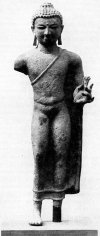 1 India has long been a divided country. For centuries, this Asian subcontinent was split among various smaller kingdoms. With every ruler eager to wage wars against each other, peace and unification were two far-fetched ideals. Nonetheless, both of these ideals came true during the Mauryan dynasty (321 B.C. - 185 B.C.). After the last Mauryan emperor was assassinated, chaos and civil wars once again loomed over India. The misery went on for nearly 600 years. It finally ended with the establishment of the Gupta dynasty (320 A.D. - 550 A.D.).
 |
Create Weekly Reading Books
Prepare for an entire week at once! |
| Leave your feedback on The Gupta Dynasty (use this link if you found an error in the story) |
|
Ancient India
|
 |
High School Reading Comprehensions and High School Reading Lessons
|
 |
Social Studies
|