
Worksheets and No Prep Teaching Resources
Reading Comprehension Worksheets
Ancient India
Ancient India
|
Worksheets and No Prep Teaching Resources Reading Comprehension Worksheets Ancient India |
Ancient India |
| edHelper's suggested reading level: | grades 8 to 10 | |
| Flesch-Kincaid grade level: | 8.57 |
|
Asoka
By Vickie Chao |
|
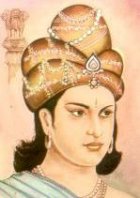 1 The national emblem of India is a replica of the Lion Capital of Sarnath. This symbol features four lions standing atop a circular abacus. (The fourth lion is hidden from view.) At the center of the abacus, beneath each lion, there is a Wheel of the Law. The abacus itself is girded by four smaller animals. They are guardians of the four directions -- the elephant in the east, the bull in the west, the lion in the north, and the horse in the south. This magnificent emblem has a very interesting history. It actually came into existence long before the Republic of India was born. Its original creator was a famous Indian emperor by the name of Asoka (also spelled as Ashoka). He was the third ruler of the Mauryan dynasty. As a devoted Buddhist, Asoka erected the Lion Capital of Sarnath near Varanasi (present-day Benares) to mark the spot where Buddha first proclaimed his gospels of peace and emancipation. During his reign, he went to great lengths to promote Buddhism. He sent monks to faraway places. He built several monasteries and constructed numerous stupas (dome-shaped structures for housing Buddhist relics). Thanks to his patronage, Buddhism was able to spread beyond India. Today, it has more than 350 million followers worldwide.
 |
Create Weekly Reading Books
Prepare for an entire week at once! |
| Leave your feedback on Asoka (use this link if you found an error in the story) |
|
Ancient India
|
 |
High School Reading Comprehensions and High School Reading Lessons
|
 |
Social Studies
|