edHelper.com
Animal Themes
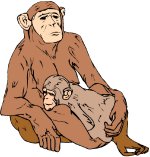
Mammals
Grasslands


Chimpanzees


Chimpanzees
Reading Level
     edHelper's suggested reading level:   grades 3 to 6
     Flesch-Kincaid grade level:   7.83

Vocabulary
     challenging words:    gestation, juvenile, rests, species, palms, upright, groom, mainly, million, than, illegal, newborn, soles, mothers, series, male


Print Chimpanzees
edHelper.com subscriber options:
     Print Chimpanzees  (font options, pick words for additional puzzles, and more)

     Quickly print reading comprehension

     Print a proofreading activity


Feedback on Chimpanzees
     Leave your feedback on Chimpanzees  (use this link if you found an error in the story)


Other Languages
     Spanish: Chimpancés


Chimpanzees   

1     Of more than two million animal species on Earth, only a few can claim to be our close relatives. The chimpanzee (or the common chimpanzee, scientific name: Pan troglodytes) is in this small, prestigious circle. Evidence? Though scientists cannot agree on an exact figure, the genetic similarity between humans and chimpanzees could come as high as 98%!
 
2     Chimpanzees -- "chimps" for short -- are quite hairy. With the exception of their bare faces, fingers, palms, and soles, they have sparse black hairs draping all over their tailless bodies. Standing nearly 5.5 feet tall, chimpanzees have remarkably long arms that reach below their knees. While they are capable of walking upright on two legs, they usually "knuckle-walk" on the ground. This traveling style, used by gorillas as well, requires them to lean forward, let the knuckles of their hands carry most of their up-to-130-pound body weight, and walk on all four limbs.
 
3     Dwelling in rain forests and grasslands of central and western Africa, chimpanzees like to live in communities comprising of about 30-70 individuals. Female chimpanzees often leave their birth communities to join a new community when they are ready to breed, but male chimpanzees prefer to stay behind. During the day, members of the community help each other hunt, gather food, groom, and defend territory. At night, each chimp (except for the young still under their mothers' care) is responsible for using branches and leaves to build its own makeshift tree nest high above the ground. It rests there overnight but abandons this temporary sleeping mat the next day.

Paragraphs 4 to 6:
For the complete story with questions: click here for printable


Copyright © 2008 edHelper