edHelper.com
Animal Themes
Mammals
Mammals


Mammals
Reading Level
     edHelper's suggested reading level:   grades 5 to 7
     Flesch-Kincaid grade level:   7.66

Vocabulary
     challenging words:    warm-blooded, provides, koala, produce, surrounding, highly, intelligent, thus, fully, during, development, however, mothers, addition, fact, such
     content words:    Sea World


Print Mammals
     Print Mammals  (font options, pick words for additional puzzles, and more)


Quickly Print - PDF format
     Quickly Print: PDF (2 columns per page)

     Quickly Print: PDF (full page)


Quickly Print - HTML format
     Quickly Print: HTML


Proofreading Activity
     Print a proofreading activity


Feedback on Mammals
     Leave your feedback on Mammals  (use this link if you found an error in the story)


Mammals   

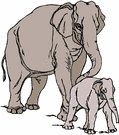
1     Mammals are warm-blooded animals. Mother mammals produce milk to raise their babies. All mammals are covered either by hair or fur and can be found in many different types of environments. Cats, dogs, elephants, whales, monkeys, and human beings are all mammals.
 
2     Mammals are able to keep the temperature inside of their bodies constant, because they are warm-blooded animals. Mammals keep their bodies warm by eating, and they stay cool by sweating. Hair or fur also helps mammals keep their body temperature constant. Some mammals, such as American bison, have thicker hair during winter to keep them warm. However, they shed some hair and do not have as much during summer so they can adjust to the hot weather. An interesting fact about mammals is that smaller mammals lose heat quicker than larger ones. That means that larger mammals can stay warm easier than smaller ones.
 
3     Not all animals are warm-blooded! Some animals, such as lizards and frogs, are cold-blooded animals. Cold-blooded animals are not mammals. Cold-blooded animals adjust their body temperature to the world around them - cold when it is cold and hot when it is hot.

Paragraphs 4 to 6:
For the complete story with questions: click here for printable


Copyright © 2009 edHelper