
Worksheets and No Prep Teaching Resources
Reading Comprehension Worksheets
Animal Themes
Polar Regions
Animal Themes
|
Worksheets and No Prep Teaching Resources Reading Comprehension Worksheets Animal Themes Polar Regions |
Animal Themes |
| edHelper's suggested reading level: | grades 6 to 8 | |
| Flesch-Kincaid grade level: | 7.63 |
| Introduction to Polar Regions |
|
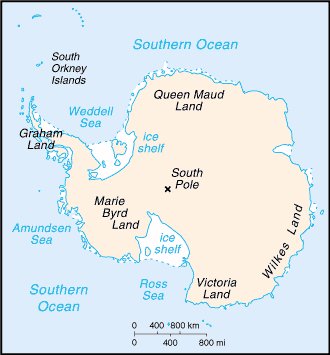 1 The Arctic and Antarctic Polar Regions are covered by snow and ice almost all year round. The Polar Regions are the world's coldest biome. The Arctic is the Earth's northernmost area. There is no land at the North Pole – only the Arctic Ocean. At the opposite end of the world from the Arctic is Antarctica. Antarctica is a continent with ice more than 12,000 feet thick! The South Pole is on Antarctica. Because Antarctica is very cold, no humans live there permanently. Together, we call the Arctic and Antarctica the Polar Regions.
 |
Create Weekly Reading Books
Prepare for an entire week at once! |
| Leave your feedback on Introduction to Polar Regions (use this link if you found an error in the story) |
|
Animal Themes
|
 |
Polar Regions
|
|
|