
Worksheets and No Prep Teaching Resources
Reading Comprehension Worksheets
Animal Themes
Mammals
Grasslands
Animal Themes
|
Worksheets and No Prep Teaching Resources Reading Comprehension Worksheets Animal Themes Mammals Grasslands |
Animal Themes |
| edHelper's suggested reading level: | grades 5 to 6 | |
| Flesch-Kincaid grade level: | 6.07 |
| Warthogs |
|
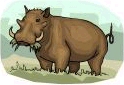 1 Let's admit it! Warthogs are perhaps one of the most unattractive animals on Earth! First, their heads seem too large for their bodies. Second, there are two or three pairs of wart-like bumps on their flat, shovel-shaped faces. Third, four tusks protrude from their jaws. Fourth, while warthogs have sparse hair on their brown skin, they have long manes extending from the top of their heads to the middle of their backs. Well, warthogs do look rather strange or downright ugly to some people, but they are very interesting.
 |
Create Weekly Reading Books
Prepare for an entire week at once! |
| Leave your feedback on Warthogs (use this link if you found an error in the story) |
|
Animal Themes
|
 |
Mammals
|
 |
Grasslands
|
|
|