
Worksheets and No Prep Teaching Resources
Reading Comprehension Worksheets
Light
Rainbows
Light
|
Worksheets and No Prep Teaching Resources Reading Comprehension Worksheets Light Rainbows |
Light |
| edHelper's suggested reading level: | grades 8 to 9 | |
| Flesch-Kincaid grade level: | 7.7 |
| Print Light and Color (font options, pick words for additional puzzles, and more) |
| Quickly print reading comprehension |
| Print a proofreading activity |
|
Light and Color
By Sharon Fabian |
|
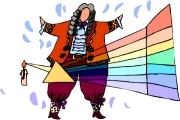 1 The very first people on Earth depended on sunlight. Sunlight allowed them to see the world around them. Early people used sunlight to look for food and to keep a lookout for dangerous animals or other people. Sunlight has produced heat for the Earth since earliest times. It is what plants use to produce food in the process called photosynthesis. Sunlight also began the process of forming our fossil fuels long before the first people arrived on Earth.
 |
Create Weekly Reading Books
Prepare for an entire week at once! |
| Leave your feedback on Light and Color (use this link if you found an error in the story) |
|
Light
|
 |
Rainbows
|
 |
High School Reading Comprehensions and High School Reading Lessons
|
 |
Science
|